Why Temporary File Sharing Improves Privacy and Compliance (GDPR, HIPAA, and Beyond)
Every time a file is shared online, a decision is made, whether consciously or not.
How long should this file exist?
For most people, the answer has traditionally been “indefinitely.” Files are uploaded, shared, and then forgotten. They remain stored in inboxes, cloud drives, and servers long after they have served their purpose.
At first glance, this may seem harmless.
But in today’s digital environment, where data privacy regulations are becoming stricter and cyber threats more frequent, keeping files available longer than necessary can create serious risks.
This is where temporary file sharing changes the equation.
Instead of storing files forever, temporary transfer systems are designed to limit how long data exists, reducing exposure and aligning with modern privacy standards.
The Problem with Keeping Files Forever
When a file remains accessible indefinitely, it creates what cybersecurity professionals call a persistent attack surface.
This simply means that the file can potentially be accessed, leaked, or stolen at any point in the future.
Even if a file is no longer actively used, it may still exist in:
- email inboxes
- cloud storage folders
- backup systems
- shared links that were never disabled
The longer this data exists, the greater the chance that something could go wrong.
According to the National Institute of Standards and Technology, reducing unnecessary data retention is a key strategy for minimizing security risks.
(Source: https://www.nist.gov)
Data you do not keep cannot be exposed later.
What Is Temporary File Sharing?
Temporary file sharing is a method of transferring files where access is limited by time, usage, or both.
Instead of leaving files available indefinitely, the system automatically removes or disables access after certain conditions are met.
These conditions may include:
- a set expiration time (for example, 24 hours)
- a limited number of downloads
- a one-time access restriction
This approach ensures that files are available only for the moment they are needed.
After that, they disappear.
Why Data Minimization Matters
One of the core principles behind modern privacy regulations is data minimization.
This concept means that organizations should collect and store only the data they truly need, and only for as long as necessary.
For example, the General Data Protection Regulation (GDPR) emphasizes limiting data storage duration as part of its data protection requirements.
(Source: https://gdpr.eu)
Similarly, in the healthcare sector, the Health Insurance Portability and Accountability Act (HIPAA) requires organizations to protect sensitive patient information and manage how it is stored and accessed.
(Source: https://www.hhs.gov/hipaa)
While these regulations do not mandate specific technologies, they strongly encourage practices that reduce unnecessary exposure of sensitive data.
Temporary file sharing directly supports this goal by ensuring that files are not retained longer than needed.
Reducing Risk Through Automatic Deletion
One of the most powerful features of temporary file sharing is automatic deletion.
Instead of relying on users to manually delete files, which often does not happen, the system handles it automatically.
This removes a common point of failure.
Human error is one of the leading causes of data breaches. Files are often forgotten, left accessible, or stored in unsecured locations simply because someone did not remember to delete them.
Automatic expiration eliminates this risk.
Once the file has been accessed or the time limit has passed, it is removed from the system.
There is nothing left to forget, misplace, or accidentally expose.
One-Time Downloads: Maximum Control, Minimum Exposure
Temporary access becomes even more secure when combined with one-time download links.
With this approach, a file can only be accessed once. After it is downloaded, it is automatically deleted or the link becomes invalid.
This creates a highly controlled environment for file sharing.
There is no ongoing access, no reusable link, and no long-term storage.
From a compliance perspective, this is extremely valuable.
It ensures that sensitive files such as contracts, identification documents, or medical records are not left accessible beyond their intended use.
The exposure window is reduced to a single moment.
How Temporary File Sharing Supports Compliance
Organizations today face increasing pressure to demonstrate that they are protecting user data responsibly.
Temporary file sharing helps support compliance efforts in several ways.
First, it reduces data retention, which aligns with privacy regulations that emphasize minimizing stored data.
Second, it limits access, ensuring that only authorized individuals can retrieve the file.
Third, it reduces the risk of unauthorized distribution, since links expire or become invalid after use.
Finally, it simplifies auditing and risk management by reducing the amount of sensitive data that must be tracked and protected over time.
According to the Cybersecurity and Infrastructure Security Agency, limiting access and reducing data exposure are key practices in protecting sensitive information.
(Source: https://www.cisa.gov)
A Practical Approach to Modern Privacy
One of the challenges organizations face is balancing security with usability.
If a system is too complex, people may avoid using it, which can lead to insecure workarounds.
Temporary file transfer systems solve this by keeping the process simple.
Users can upload a file, share a secure link, and rely on the system to manage access and deletion automatically.
There is no need for manual cleanup, complex configurations, or ongoing monitoring.
This makes it easier for individuals and businesses to adopt better security practices without adding friction to their workflow.
The Shift Toward Ephemeral Data
The broader trend in cybersecurity is moving toward what can be described as ephemeral data.
Instead of storing information indefinitely, systems are designed to keep data only for as long as it is needed.
This reduces long-term risk and aligns with modern privacy expectations.
Temporary file sharing is a clear example of this shift.
By limiting how long files exist and how they can be accessed, it provides a more responsible and secure way to handle sensitive information.
Summary
Temporary file sharing improves privacy and supports regulatory compliance by limiting how long files remain accessible and reducing unnecessary data retention.
Traditional file sharing methods often leave documents stored indefinitely, increasing the risk of data breaches, unauthorized access, and compliance issues.
By introducing features such as expiration dates, automatic deletion, and one-time downloads, temporary file transfer systems minimize exposure and give users greater control over their data.
These capabilities align with key principles found in regulations such as GDPR and HIPAA, which emphasize data minimization, controlled access, and responsible data handling.
In a world where data privacy is becoming increasingly important, temporary file sharing offers a practical and effective way to reduce risk while maintaining simplicity and ease of use.
Start Sharing Files Securely
If you want to reduce data exposure and align with modern privacy practices, using a temporary file transfer system is a simple and effective step.
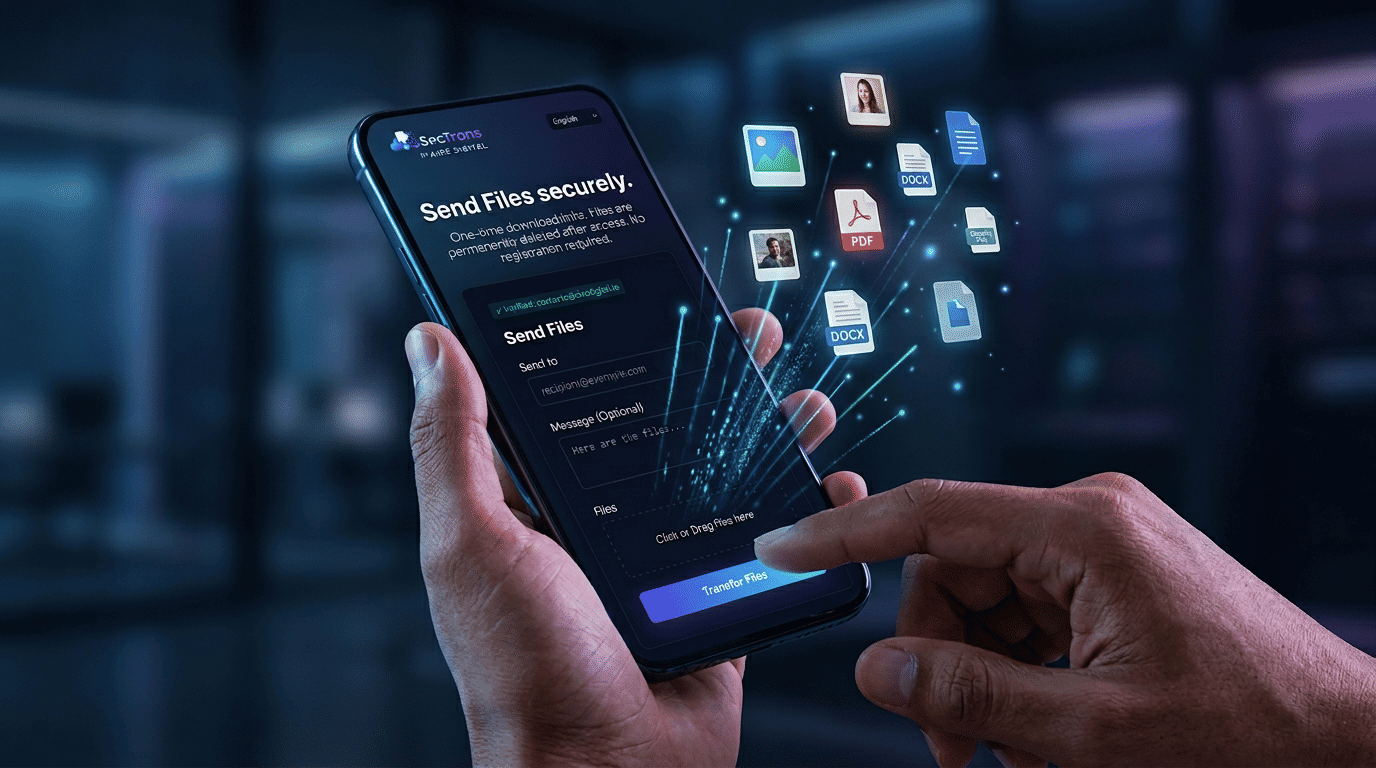
SecTrans allows you to upload files, generate secure links, and automatically delete them after they are accessed. This helps ensure your files are shared only when needed and are not stored longer than necessary.
You can start sharing files securely in seconds.
Visit https://sectrans.airedigital.io and experience a smarter, safer way to transfer files.